












The Science Behind the Heat
Why Is Everyone Talking About Infrared Saunas?
Saunas have been used for relaxation, recovery, and heat exposure. Now researchers are looking more closely at what controlled heat actually does inside the body.
Studies have explored potential effects on cardiovascular function, circulation, exercise recovery, pain, sleep, and overall well-being. Infrared saunas offer another approach, using infrared energy to warm the body more directly than traditional hot-air saunas.
The research is still evolving, particularly for infrared-specific sauna use, but the findings are getting interesting.
Here’s what current research says.
What Is an Infrared Sauna?
An infrared sauna uses infrared energy to produce heat. Instead of primarily heating the air around you, infrared energy warms the body more directly.
Full-spectrum infrared saunas, including the UltraLux Foldaway Sauna, use near, mid, and far infrared wavelengths. Much of the clinical research involving infrared saunas has focused specifically on far-infrared heat.
Different technology. Same goal: controlled heat exposure without needing traditional sauna-level air temperatures.
What Happens in the Body During an Infrared Sauna Session?
When the body is exposed to heat, it immediately begins working to maintain its internal temperature.
Blood vessels near the skin widen, circulation changes, heart rate may rise, and sweating increases as the body works to release excess heat. These responses are part of the body’s natural process for regulating temperature and adapting to heat exposure.
You may be sitting perfectly still.
Your circulatory system, however, has received the memo that something is happening.
Several important changes occur.
Blood Flow Increases
As the body warms, blood vessels expand to help move heat toward the skin.
This process, called vasodilation, increases peripheral circulation and changes the workload placed on the cardiovascular system. A 2021 systematic review and meta-analysis, The Effect of Heat Therapy on Blood Pressure and Peripheral Vascular Function, found that regular heat therapy was associated with improvements in blood pressure and vascular function.
Your Heart Responds to the Heat
Sauna exposure can increase heart rate as the cardiovascular system works to move blood toward the surface of the body.
This is one reason scientists have become so interested in passive heat therapy. While sitting in a sauna certainly does not replace exercise, some of the circulatory responses to heat overlap with responses seen during physical activity.
Apparently relaxation can still give your cardiovascular system a small assignment.
Sweating Increases
As body temperature rises, sweating increases to help the body cool itself.
Sweat is primarily a temperature-regulation system, but researchers have also found that certain environmental substances, including some heavy metals, can be detected in sweat.
That finding has sparked a lot of interest around sauna use and “detox,” but the science is more nuanced than the wellness world sometimes makes it sound.
What Are the Benefits of Infrared Sauna Therapy?
Current research suggests that sauna bathing and passive heat therapy may support cardiovascular function, circulation, physical recovery, relaxation, and certain types of discomfort.
However, there is an important research distinction.
Traditional sauna bathing has the largest evidence base. Infrared sauna research is promising but includes fewer clinical trials, often with relatively small groups of participants.
With that in mind, here is where the research gets interesting.
1. Your Cardiovascular System Likes Heat More Than You Might Think
Some of the strongest sauna research involves cardiovascular health.
Infrared-specific research is smaller, but a review titled Far-Infrared Saunas for Treatment of Cardiovascular Risk Factors: Summary of Published Evidence examined studies on far-infrared sauna therapy and found promising evidence involving blood pressure and cardiovascular function.
The research is encouraging, but larger and longer-term studies are still needed to better understand the cardiovascular effects of infrared sauna use.
Heat does not replace a walk, strength training, or cardiovascular exercise.
But your cardiovascular system may still have something to gain from the heat.
2. Recovery May Be One of Infrared Sauna’s Most Interesting Uses
Athletes have been sitting in saunas after workouts for years.
Researchers eventually decided to find out whether there was more happening than a very warm victory lap.
A 2023 study, A Post-Exercise Infrared Sauna Session Improves Recovery of Neuromuscular Performance and Muscle Soreness After Resistance Exercise Training, found improvements in certain measures of neuromuscular recovery and muscle soreness following exercise. The researchers noted that infrared sauna may offer a useful recovery strategy, while also acknowledging that infrared-specific evidence remains relatively limited.
The combination of increased circulation, heat exposure, and relaxation may help explain why sauna sessions have become increasingly popular after strenuous physical activity.
Recovery still requires sleep, nutrition, hydration, and appropriate training.
The sauna is not getting you out of those.
3. Heat May Help With Muscle and Joint Discomfort
Heat and sore muscles have been friends for a long time.
Infrared sauna research provides some scientific support for that relationship.
A pilot study, Infrared Sauna in Patients with Rheumatoid Arthritis and Ankylosing Spondylitis, found that infrared sauna sessions were well tolerated and associated with short-term improvements in pain and stiffness. The study was small, so the results should be interpreted cautiously, but the findings support continued research into infrared heat as a complementary wellness practice.
Broader research has also explored heat therapy for musculoskeletal discomfort and pain.
In other words, there may be some science behind that instinct to immediately seek warmth when everything hurts after leg day.
4. Sauna Time May Help Your Body Shift Into Relaxation Mode
Not every wellness benefit needs to involve a complicated biochemical pathway.
Sometimes feeling warm, comfortable, and temporarily unavailable is enough.
A 2024 population study, Sauna Bathing in Northern Sweden: Results from the MONICA Study 2022, found that sauna users reported higher happiness and energy levels, better general and mental health, and more satisfying sleep compared with non-users.
Because the study was observational, researchers cannot conclude that sauna use alone caused those differences.
But the relationship between sauna bathing, relaxation, and well-being remains an interesting area of research.
And there is something refreshingly uncomplicated about closing the zipper, putting down your phone, and being warm for a while.
5. What About Sleep?
This is one of the most interesting areas, but it is also one where wording matters.
Direct research specifically examining infrared saunas and sleep is limited.
However, a 2019 systematic review and meta-analysis, Before-Bedtime Passive Body Heating by Warm Shower or Bath to Improve Sleep, found that passive heating before bed was associated with improvements in certain sleep outcomes, including falling asleep faster and improved sleep efficiency.
The study looked at warm baths and showers rather than infrared saunas, so the findings cannot be directly applied to infrared sauna use.
Observational sauna research has also found that sauna users commonly report more satisfying sleep.
That does not mean an infrared sauna is a treatment for insomnia, but it does make the relationship between heat and sleep an interesting area for continued research.
Your bedtime routine may have just become significantly warmer.
6. Let’s Talk About “Detox”
Few words in wellness get used as freely as “detox.”
Your liver and kidneys handle most of the body’s detoxification work. However, research has found substances including arsenic, cadmium, lead, and mercury in human sweat.
A systematic review titled Arsenic, Cadmium, Lead, and Mercury in Sweat: A Systematic Review found that sweating may be one route through which certain toxic elements leave the body, while emphasizing that more controlled research is needed to determine its clinical significance.
So, can you sweat out certain substances? Research suggests yes.
Does that mean an infrared sauna “flushes toxins” from your body? The evidence isn’t strong enough to make that claim.
The science is interesting enough without turning sweat into a miracle cleanse.
Traditional Sauna vs. Infrared Sauna
Both approaches use heat, but they create that heat differently.
Traditional Finnish saunas typically use very hot air to heat the body, while infrared saunas use infrared energy to warm the body more directly and can operate at lower surrounding air temperatures.
This distinction matters when interpreting research.
Much of the long-term research commonly associated with sauna benefits has focused on traditional Finnish sauna bathing. Those findings should not automatically be applied to infrared saunas, since the technologies, temperatures, and treatment protocols can differ.
Infrared sauna research has produced promising findings of its own, especially around cardiovascular function, pain, and exercise recovery, but the evidence base is still developing.
Different technology.
Similar heat response.
Still plenty left for researchers to figure out.
Is Infrared Sauna Use Safe?
Sauna bathing is generally well tolerated by many healthy adults, but heat exposure is not appropriate for everyone.
The main immediate concerns include dehydration, overheating, dizziness, and changes in blood pressure. Reviews of sauna research also emphasize that more research is needed to establish ideal session duration, frequency, and safety recommendations for specific health conditions.
People who are pregnant, have cardiovascular or other chronic medical conditions, have difficulty regulating body temperature, or take medications that affect hydration, blood pressure, or heat tolerance should talk with a healthcare professional before beginning regular sauna use.
And hydration matters.
Sweating without replacing fluids is less “wellness routine” and more “unnecessarily difficult afternoon.”
Tips for Getting Started
If you’re new to infrared sauna use, there is no prize for starting with the longest, hottest session possible.
Begin with shorter sessions at a comfortable temperature, stay well hydrated, and give your body time to adjust to the heat.
Pay attention to how you feel during and after each session. Stop if you become dizzy, lightheaded, nauseated, unusually weak, or uncomfortable.
Consistency matters more than turning every session into an endurance event.
Making Infrared Sauna Therapy Easier to Use at Home
There is one obvious challenge with traditional home saunas.
They tend to require a home sauna.
That usually means dedicated floor space, installation, and a permanent structure.
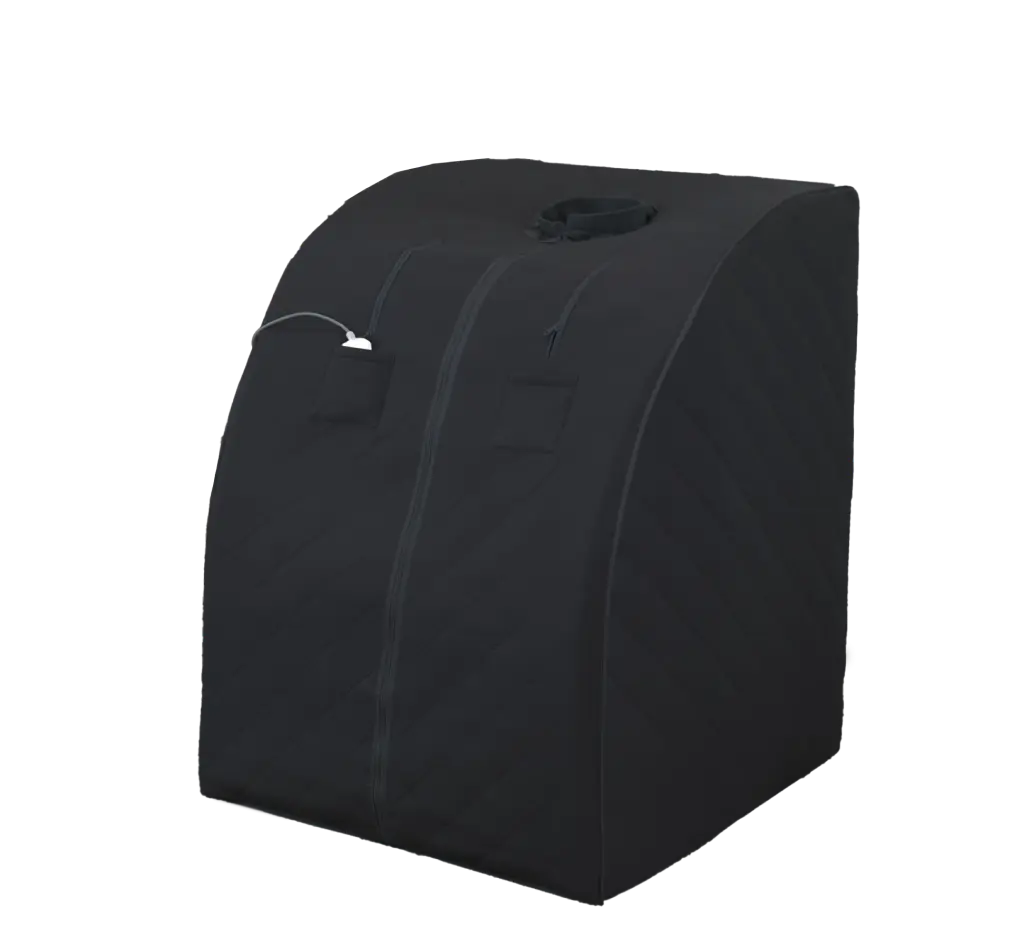
The UltraLux Foldaway Sauna was designed around a much simpler idea: what if infrared heat therapy could fit into everyday life without requiring you to redesign a room around it?
The Foldaway Sauna uses full-spectrum infrared heat and can be folded down to approximately 6.5 inches deep for storage. The current product specifications list the unit at under 19 pounds and report EMF levels below 0.5 mG. It can be set up for a session and then stored in a closet or under a bed when it is not being used.
It also includes openings that allow your head and hands to remain outside of the heated enclosure, making it possible to read, watch something, or simply relax during a session.
Because the healthiest routine is usually the one that actually fits into your life.
The UltraLux Health Perspective
At UltraLux Health, we believe wellness is built through consistent, evidence-based habits, not quick fixes.
Infrared sauna therapy is one tool that may support circulation, recovery, relaxation, and overall well-being. It does not replace movement, quality nutrition, hydration, sleep, or medical care.
Our goal with the UltraLux Foldaway Sauna is simple: make heat therapy easier to incorporate into everyday life.
Because a wellness routine is only useful if it actually fits into your routine.
What Most People Get Wrong About Infrared Saunas
One of the biggest misconceptions is that hotter temperatures and more sweat automatically mean greater benefits.
They don’t.
Researchers have not established one perfect sauna temperature, session length, or frequency for everyone. And while sweating can excrete certain substances, that does not mean every sauna session is a full-body “detox.”
Another important distinction: not all sauna research is interchangeable. Traditional Finnish sauna has the largest body of research, while infrared-specific research is smaller but growing.
Good wellness doesn’t require exaggerating the science. The actual research is interesting enough.
Frequently Asked Questions
What is a full-spectrum infrared sauna?
A full-spectrum infrared sauna uses near, mid, and far infrared wavelengths rather than relying on only one portion of the infrared spectrum. The UltraLux Foldaway Sauna is designed as a full-spectrum infrared sauna.
Is an infrared sauna the same as a traditional sauna?
No. Traditional saunas primarily heat the surrounding air, while infrared saunas use infrared energy to warm the body more directly.
How long should an infrared sauna session be?
There is no scientifically established session length that is ideal for everyone. Beginners should start conservatively and gradually adjust based on comfort, health status, and product instructions. Reviews of sauna research note that optimal frequency and duration still require further study.
Can infrared sauna use help with muscle recovery?
Early research suggests it may. A 2023 study found improvements in certain aspects of neuromuscular recovery following a post-exercise infrared sauna session, although more research is needed.
Does sauna use remove heavy metals?
Research has found arsenic, cadmium, lead, mercury, and other elements in human sweat. However, evidence is not strong enough to claim that infrared sauna use is a proven treatment for heavy-metal toxicity. Anyone concerned about toxic exposure should work with a qualified healthcare professional.
Can infrared sauna use improve sleep?
There is promising evidence linking passive body heating with sleep, and observational sauna research has reported better self-reported sleep among sauna users. Direct clinical research specifically on infrared sauna therapy for sleep remains limited.
How often should I use an infrared sauna?
Research has not established one ideal schedule for everyone. Frequency should be based on individual tolerance, hydration, health status, and the manufacturer’s recommendations.
Friendly Disclaimer
This article is for educational purposes only and is not medical advice, or a diagnosis.
Infrared sauna use may not be appropriate for everyone. If you are pregnant, have a medical condition, take prescription medications, or have concerns about heat exposure, talk with a qualified healthcare professional before using an infrared sauna. Stay hydrated, follow the manufacturer’s instructions, and stop using the sauna if you feel unwell.